
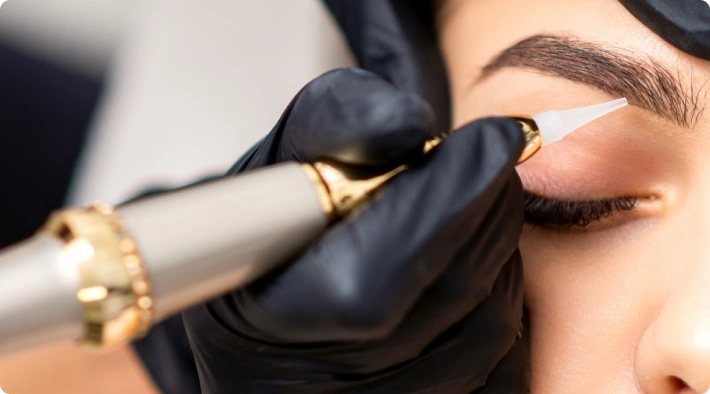
Most beauty professionals spend years building a client list. But some SPMU artists book their first paying client within weeks of certification. How does it really happen? The difference here is not only the talent but the EXPERT LEVEL TRAINING they are trained in.
India’s beauty market is moving fast, and it is not slowing down. Semi-permanent makeup courses in India are sitting at the premium end of that shift right now. Clients want results that last days, not just a single day or hours. Salons and aesthetic clinics are done waiting. They want artists who deliver. The market demand is real, it is growing, and the pool of properly trained artists in India is still nowhere near large enough to meet it.
But here is where most people go wrong. They pick a course based on price or proximity. They do not ask the harder questions. What does this training truly cover? What do I walk out with? Is this enough to start earning, or just enough to feel certified?
This guide answers you with each one.
What is Semi-Permanent Makeup, and why do clients keep coming back for it?
Semi-permanent makeup is not something you apply on top of skin. It is pigment deposited into the upper dermal layer using a precision machine. The results hold for 1 to 3 years, but it depends on skin type, technique, and aftercare. Then they fade cleanly, without the grey-blue shift that permanent tattoo ink leaves behind. That distinction is really impressive.
Traditional permanent makeup goes deeper into the skin. It cannot be adjusted as your face changes or trends shift. Semi-permanent work can be adjusted. Shape, shade, and density can all be revisited. This type of flexibility is exactly why clients prefer it.
The three areas it covers are:
- Semi permanent eyebrows
- Semi permanent lip blush
- Semi permanent eyeliner
Each one targets a different concern. Brows frame the face. Lip blush restores definition and tone. Eyeliner creates a clean lash line without the daily effort of putting on mascara. Together, this eyebrow, lip, and eyeliner training covers the full scope of what clients walk in asking for. Results that last for the coming years. No daily routine and no smudging.
That is the value clients are paying for, and why they come back for touch-ups (no other alternatives).
What a Serious Semi-Permanent Makeup Training Course Covers
Most people assume all courses teach the same things. Let’s tell you they do not. The gap between a surface-level program and a properly structured one shows up the moment you sit in front of your first real client.
Here is what serious semi-permanent makeup training courses include and why each part carries weight.
- Skin histology and pigment behaviour: Before you touch a client, you need to understand what the skin does with pigment after a session ends. How it heals. How different skin types retain colour. Why can the same technique on two people produce two completely different results? This is where the science lives, and skipping it produces assumptions.
- Colour theory for Indian skin tones: India does not really have one skin tone, not even close. It has the full spectrum, from very fair with pinky undertones to deep brown with warm or cool bases. So an artist who doesn’t get this part will just pick pigments that oxidize, go more grey than intended, or start looking unnatural within months. Colour theory for Indian skin tones isn’t “extra” knowledge. It is indeed the basic work that you, as an artist, cannot skip. It’s the difference between a result that stays and one that needs correcting.
- Advanced SPMU techniques (machine handling, needle physics, depth control): Speed, pressure, and needle configuration -These variables decide if pigment lands where it should inside the skin or if it splashes out. Advanced SPMU techniques cannot be absorbed from a single walkthrough video. They require structured practice, genuine feedback, and repetition on practice skin before a real face.
- Correction work: The most under-taught module in almost every program. At some point, every artist sees a client who has had poor previous work. If you cannot correct it, you turn them away. If you can, you hold a skill that almost no one else in your city offers.
- Client consultation and aftercare: Technical precision without communication creates unhappy clients. This module teaches you how to assess suitability, set realistic expectations, and manage the full experience before pigment ever touches skin.
Can You Really Learn SPMU Online?
The most common pushback against online SPMU training is fair. How do you learn a hands-on skill through a screen? The concern comes naturally to mind. But the argument is aimed at the wrong target.
The problem was never online learning. The problem was online programs that handed you video files and called it “training” with no kit, no practice skin, and no feedback. Just recordings and a certificate at the end. This version of online is incomplete. But it is not the only version.
A properly structured online program like Air Permanent solves each of those gaps directly:
- Your professional kit ships to your door before the course begins.
- HD macro-level video shows needle depth, pigment behaviour, and machine pressure in more detail than most crowded workshops can.
- You practice on real practice skin with mentor feedback on every submission.
- Every module is rewatchable as many times as the technique requires.
That is what separates any structured PMU machine-based training program from a folder of recordings.
Who benefits most from this format:
- Career-switchers who cannot take two weeks off work
- Learners in cities without access to quality local academies
- Salon owners are building new skills while still running their businesses.
How to Choose an SPMU Academy in India: 5 Things to Consider
Picking the wrong course does not just cost you money. It costs you months of rebuilding confidence, correcting technique, and in some cases, retaking training entirely. These five questions cut through the noise before you pay anything.
1. Who is teaching, and are they still practicing?
Trainer credentials truly matter more than academy branding. Look for international training history, active licensing, and artists who are still working on real clients regularly. An educator who has not touched a machine in two years teaches theory. You need someone teaching from current, active practice.
2. What certification do you actually receive?
There is a difference between an industry-recognized credential and an in-house certificate. Ask directly: Does this SPMU certification course carry weight with clients? With aesthetic clinics? With insurance providers, if you plan to work professionally? The answer tells you everything about how seriously the program takes your career.
3. Does the course include the machine and a full professional kit?
This is not a bonus feature. It is a baseline requirement. A semi permanent makeup course that sends you out without tools is setting you up to fail before you start. Your first 15 to 20 clients fund your early career. You need a professional-grade machine, the right pigments, practice skin, and aftercare products from Day 1 (not after you earn enough to buy them separately).
4. What does the actual learning look like?
HD macro-level video that shows needle depth, pigment layering, and pressure control is categorically different from a standard recording. Ask to see a sample module. If the academy hesitates, that hesitation is the answer.
5. What happens after certification?
The career does not begin at graduation. It begins in the three to six months after, when you are pricing your services, finding your first clients, and positioning yourself in your market. A good how to choose SPMU academy checklist always ends here. Business guidance, pricing strategy, and post-certification mentorship are what separate a course that launches you from one that just qualifies you.
You Do Not Need a Beauty Background to Build an SPMU Career
One assumption stops a lot of people before they even research a course. That SPMU is for people already working in beauty. That you need a salon background, a makeup qualification, or some innate artistic ability to make it work.
None of that is true.
- Beginners and career-switchers: They are often the strongest students in a structured program. SPMU is technical before it is artistic. It rewards people who follow the process, pay attention to detail, and practice with patience. Analytical people (those coming from teaching, finance, healthcare, even IT) often outperform people who consider themselves naturally creative but underestimate the precision this skill demands. The art comes from repetition. The technique comes from training.
- Existing beauty professionals: Salon owners, makeup artists, and beauticians are sitting on an opportunity most have not fully calculated yet. Adding SPMU does not just expand your service menu. It repositions everything you already offer. Clients who come in for brows and lips are higher-value clients. One skill shifts how you price, how you market, and how your existing client base sees you.
- Microblading-trained artists: These artists have the clearest path of all. Manual technique built your foundation. PMU machine-based training takes your precision further, expands your range of techniques, and opens up correction work that manual training alone cannot handle.
The Bottom Line
Certifications are common, but careers built on them are not. The gap between the two is not talent, location, or even the city you practice in. It is the depth of what you learned, the tools you walked out with, and the standard the training held you to before you ever sat in front of a paying client.
An SPMU career in India has a genuine income ceiling that most beauty skills do not reach. The demand is high. The trained artist shortage across Tier-1 and Tier-2 cities is what makes this demand concrete.
Last but not least, a certificate gets you permission to practice. However, the right program gets you ready.If you are looking for a structured, internationally grounded program that includes your machine, your professional kit, and a business roadmap built into the curriculum. You are at the right place to start with Air Permanent. Learn what Air Permanent offers before you decide. View Courses at Air Permanent
Some artists practice. AIR Permanent Artists Master.
AIR Permanent was established for artists who hold themselves to a standard most people cannot see. If that is you, you already know what to do.
Get Your Registration Done
(Online and Offline students are all welcome)